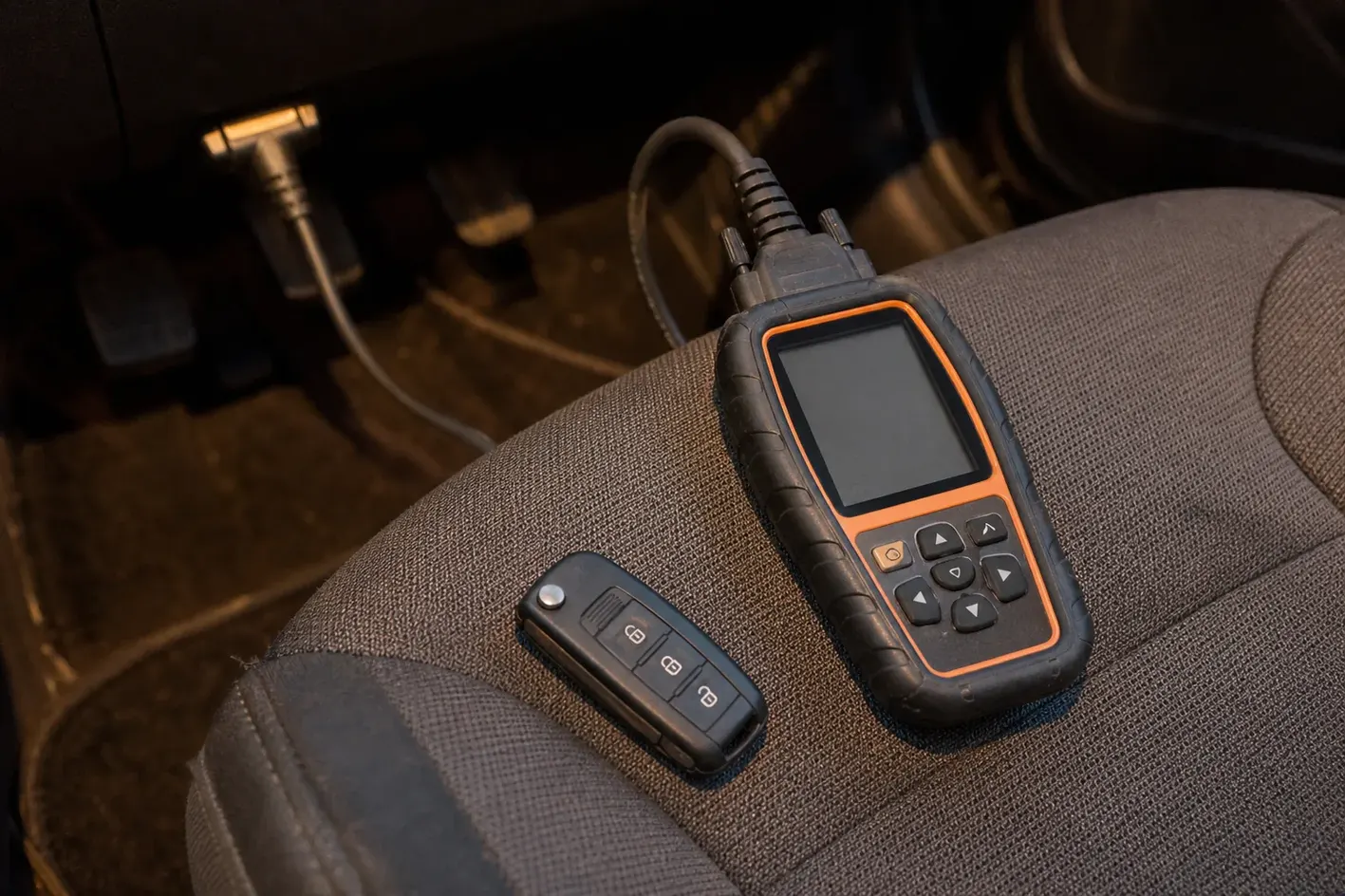
A key fob is a small radio and a small computer. It sends a rolling code to the car for the locks, and on push-button cars it also carries the chip the car checks before it lets the engine run. Three things fail: the battery, the buttons and the pairing. A dead battery is the common one and the one people rule out first. Worn buttons are next. Lost pairing is the odd one: the fob works, then one day the car stops recognizing it.
None of that needs the dealership. A mobile locksmith in Killeen programs fobs at the car, for most makes, in one visit.
Before anyone is called: change the battery. The fob comes apart with a coin or a small screwdriver at the seam, the battery type is printed on the old cell, and a drugstore or grocery store has it. On a push-button car with a dead fob, there's usually a marked spot on the steering column or in the cupholder where the fob still works by touch. The owner's manual shows it. If a fresh battery brings the fob back, that was the job.
If it doesn't, or if the fob is lost rather than dead, that's the call.
With every fob lost, the locksmith comes to the car, confirms you're the owner, reads what the car needs from the car itself, and cuts and programs a new fob to it. On most cars the old fob is erased from the car's memory at the same time, so whoever has it holds a dead piece of plastic. That last step matters more than people expect, and it's the thing a hardware-store clone of a fob can't do.
Ownership is checked every time: registration or title against photo ID. It's the step that makes the whole thing legitimate.
If you have one working fob, a second one is quick: the technician pairs a new fob alongside the existing one, no reading from the car needed. Households in Killeen with one fob between two drivers, or a teenager who just started driving, are the classic case. A spare made while you still have a key is a small job; the same fob made after the last one is lost is a bigger one. That isn't a sales line, it's how the programming works.
Ask for the spare to be programmed the same visit as any other car key work; it's the same equipment already out.
Remote-head key: a metal blade with buttons in the head. Blade turns the ignition, buttons do the locks, chip in the head. Fob with a separate key: buttons on the fob, a plain chipped key for the ignition, common on 2000s cars. Smart key: no blade, push-button start, the fob stays in your pocket. All three are programmed by a mobile locksmith; the smart key takes the longest and is the one where the dealer is most often assumed to be the only option. It isn't, for most makes.
A photo of your fob and the year and model is enough for the technician to bring the right one.
Only the dealer can program a fob. For most makes a mobile locksmith does it at the car. A lost fob means the car has to be towed. The locksmith comes to it. Online fobs are the same thing. An unprogrammed fob bought online may or may not match the car's system; the technician can tell you before you buy. If the fob is dead the car is dead. Every push-start car has a fallback spot for a dead fob.
Yes, for most makes, at the car. Smart keys take a little longer than a remote-head key.
No. The technician comes to the car in Killeen and programs a new fob from the car itself.
On most cars, yes; it's erased from the car's memory when the new one is programmed.
Photo ID and the registration or title, plus the year and model. A photo of the old fob helps.
Sometimes. Send the listing and the car details first; the technician will say whether it can be paired before you spend on it.
Same-day service. Call us and we come out.